
How to Find the Best Financial Advisor for You

Choosing a financial advisor can shape your retirement income, tax decisions, investment discipline, and peace of mind for years to come. The right advisor brings experience, a clear planning process, and guidance that fits the life you’re building—not just the portfolio being managed.
Many people begin the search by focusing on performance or credentials. Those matter, but so do trust, communication, and whether the advisor understands the goals behind your money. A strong relationship often comes from finding someone who can help you make wise financial decisions while keeping your priorities in view.
At Petersen Hastings, we believe financial planning works best when it begins with understanding where you’re most invested in life—family, business, legacy, freedom, and future opportunities.
At a Glance: How to Find the Best Financial Advisor for You
Many people narrow the search by focusing on these factors:
- Fiduciary responsibility and transparency.
- Clear explanation of fees.
- Experience with situations similar to yours.
- Comprehensive planning beyond investments.
- Consistent communication.
- Long-term relationship mindset.
- A thoughtful, repeatable planning process.
- Confidence and trust during uncertain markets.
What Makes a Financial Advisor “Best”?
The best fit financial advisor varies depending on your goals, stage of life, complexity, and the type of relationship you prefer.
If you’re nearing retirement, you may value income planning, Social Security timing, and tax coordination. If you’re a business owner, you may need succession planning and liquidity-event guidance. If you’re managing inherited wealth, you may prioritize estate planning and stewardship.
That is why many investors begin by understanding their own needs before comparing firms. A thoughtful planning journey often starts with clarity, which is why Petersen Hastings emphasizes a personalized discovery process through Your Invested Journey.
7 Questions to Ask Before Hiring a Financial Advisor
1. Are you legally obligated to act in my best interest?
Understanding whether an advisor is bound by a fiduciary standard matters. A fiduciary advisor will always make sure your interests remain central at all times.
2. How are you compensated?
Ask for a clear explanation of fees, advisory costs, and any compensation arrangements. A good advisor should welcome transparency.
3. What types of clients do you typically help?
Experience matters most when it relates to situations similar to yours. Retirees, families, professionals, widows, nonprofit leaders, and business owners often have very different planning needs.
4. Do you provide full financial planning or focus strictly on investment management?
Investments are only one part of the picture. Comprehensive financial planning may also include retirement planning, tax awareness, estate coordination, charitable strategies, and risk management.
5. How often will we meet?
Communication expectations should be clear from the start so you know what to expect.
6. How do you guide clients during market declines?
Market volatility often reveals an advisor’s discipline and communication style. Ask how they help clients stay focused during uncertain periods.
7. How do taxes affect the plan?
Tax decisions can influence your long-term outcomes as much as investment returns.
Credentials That Matter
Professional designations can be helpful signals of education and commitment. Examples may include CFP® professionals, CPAs, or other specialized credentials.
Still, credentials alone do not guarantee a good fit. Wisdom, judgment, listening ability, and practical experience often matter just as much. Many investors prefer an advisor who can explain complex issues clearly and make planning feel approachable.
Understanding Advisor Fee Structures
Different firms use different compensation models. Knowing how an advisor is paid helps you create clarity.
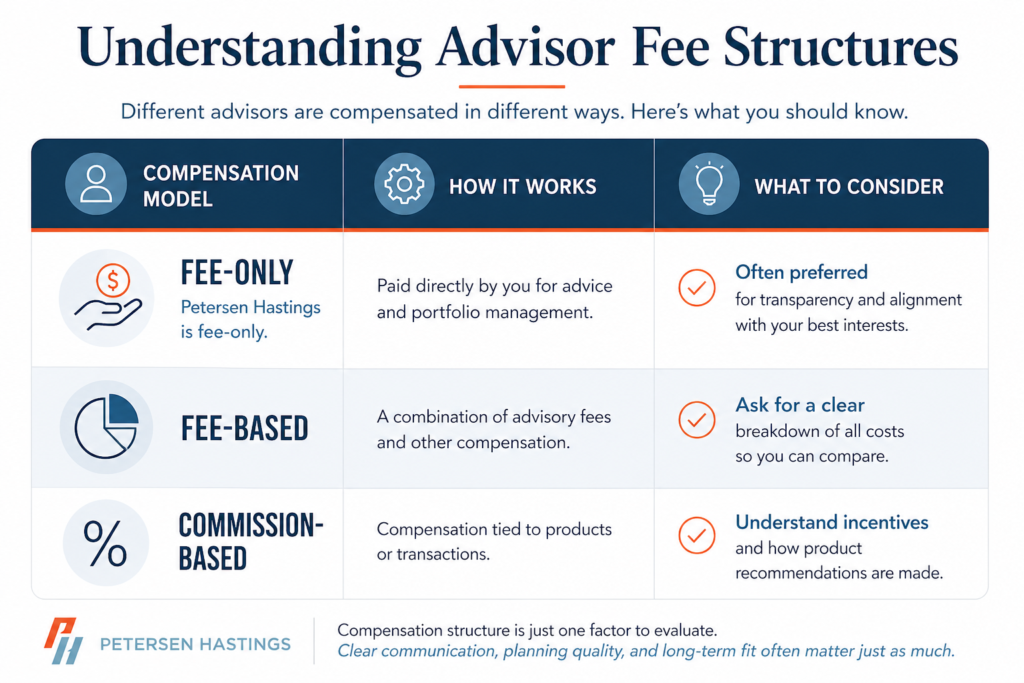
The right advisor is often less about labels and more about openness, trust, and whether recommendations are clearly aligned with your long-term goals.
Red Flags to Watch For
A productive advisor relationship should feel clear and steady. Warning signs may include:
- Vague explanations of fees
- Pressure to act quickly
- Promises of unusually high returns
- Little interest in your personal goals
- Generic portfolios with no planning discussion
- Difficulty reaching the advisor
- Excessive jargon instead of clarity
When Is the Right Time to Hire a Financial Advisor?
Many people wait longer than necessary. Advice can be most valuable during transitions, especially before major decisions are made.
Common moments include:
- Within ten years of retirement.
- Receiving an inheritance.
- Selling a business.
- Managing stock compensation.
- Becoming widowed or divorced.
- Navigating pension options.
- Entering a higher tax bracket.
- Wanting greater confidence and organization.
If you’re approaching retirement, proactive planning often creates more flexibility than last-minute adjustments. Read more.
Why Many Families Prefer a Local Financial Advisor
Technology makes remote advice possible, but many people still value face-to-face conversations and local relationships.
If you live in the Tri-Cities, Yakima, Walla Walla, or Spokane, you may appreciate working with an advisor who understands the region, local industries, and the financial decisions common to Eastern Washington households.
That may include pension decisions, farmland transitions, business ownership, charitable giving, or multigenerational family planning.
A Different Way to Evaluate an Advisor
Awards and recognition can signal consistency, reputation, and professional standards.
While Petersen Hastings is thrilled to be recognized on CNBC’s FA 100 list and named amongst the Tri-Cities Best, we’re most proud of the relationships we’ve developed with our clients across Eastern Washington for over 60 years.
Instead of seeking the most recognizable name, it may be more useful to ask:
- Who listens carefully?
- Who explains things clearly?
- Who stays steady when markets are difficult?
- Who understands what this money is meant to accomplish?
- Who has a process designed for long-term success?
How Petersen Hastings Approaches the Search
We believe you deserve more than generic financial advice. Our process begins with understanding your priorities, concerns, values, and goals. From there, planning and investment decisions can be built around what matters most to you.
That philosophy guides everything from retirement readiness to business-owner planning and nonprofit stewardship through initiatives like Solutions for Your Business and Empower Your Non-Profit’s Impact.
Frequently Asked Questions
What is the best way to find a financial advisor?
Start by defining your goals, asking trusted referrals, reviewing credentials, understanding fees, and interviewing more than one advisor.
Is it worth paying for a financial advisor?
For many households, professional guidance can improve organization, discipline, tax awareness, and confidence in major decisions.
Should I choose a local advisor?
Many investors value in-person access and local familiarity, though relationship fit remains most important.
How much money do I need to hire an advisor?
Many people benefit before reaching high wealth, especially during retirement planning or life transitions.
What is a fiduciary financial advisor?
A fiduciary is generally expected to place your interests first when giving advice.
The Right Advisor Often Feels Different
The best advisor relationship often feels clear, steady, and personal. Your questions are welcomed. Decisions become easier to understand. Progress feels intentional.
Finding the right fit can take time, but it is often one of the most valuable financial decisions you’ll make.
Ready to invest in what matters to you?
Call today or schedule a free consultation with your local Advisor.